
Mark M. Bailey, PhD
Founder | Principal Intelligence Officer
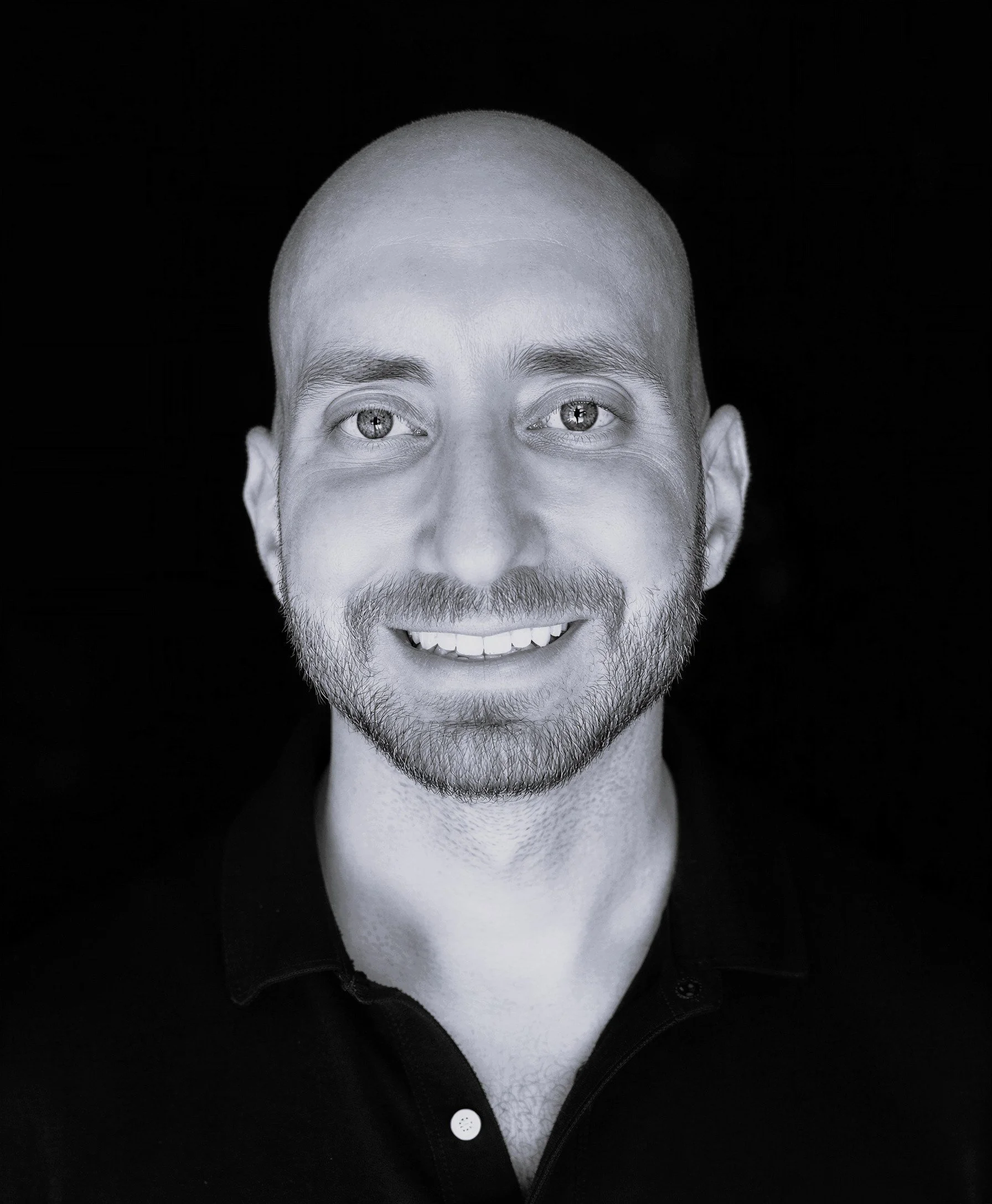
Mark Bailey is the founder and Principal Intelligence Officer of DataField Intelligence, where he leads work at the intersection of artificial intelligence, complexity science, intelligence analysis, and national security. His focus is on translating advanced methods—including interpretable AI, graph and network analytics, topological data analysis, and complexity-informed modeling—into capabilities that can withstand the operational, security, and governance demands of defense, intelligence, and homeland-security missions.
Mark is a lieutenant colonel in the U.S. Army Reserve. His military service has included intelligence, data-science, counterproliferation, chemical and biological defense, and consequence-management assignments. He has supported the Defense Intelligence Agency as a data-science and AI subject-matter expert focused on biological-threat assessment and has served as a Chemical and Biological Support Officer in a Consequence Management Unit.
Earlier in his career, Mark served as an Army technical adviser to the U.S. Department of State’s Bureau of International Security and Nonproliferation, where he supported chemical and biological security, nonproliferation, arms-control, and interdiction initiatives. During Operation United Assistance in 2014, he deployed to Liberia as officer in charge of a forward-deployed Ebola diagnostics laboratory, overseeing analysis in support of treatment and containment operations.
Before founding DataField Intelligence, Mark served as an associate professor at the National Intelligence University. He chaired the department responsible for artificial intelligence, cyber intelligence, influence, and data science and directed the Biological and Computational Intelligence Center. His teaching and research addressed data-science mathematics, algorithmic warfare, science and technology intelligence, AI-enabled decision support, advanced visualization, and research design for intelligence applications. He also supervised applied work involving graph analytics, machine learning, simulation modeling, opinion dynamics, hypernetworks, and sentiment analysis.
His broader career spans technical and analytic roles across the defense, intelligence, biodefense, and research communities. He has supported AI-enabled decision-making for the Algorithmic Warfare Cross-Functional Team, developed open-source intelligence tools for Marine Corps intelligence missions, advised Intelligence Community clients on analytic modernization, led biodefense research at the U.S. Army Medical Research Institute of Infectious Diseases, and conducted postdoctoral research at the National Institute of Standards and Technology.
This combination of operational service, scientific research, intelligence experience, and program leadership informs DataField’s approach. Advanced analytics must do more than perform well in a laboratory. They must also be explainable, auditable, secure, supportable, and capable of integrating into the systems and workflows mission teams already use.
Mark is the author of Unknowable Minds: Philosophical Insights on AI and Autonomous Weapons, which received recognition from the Military Writers’ Association of America and the Nonfiction Authors Association. His writing on AI has appeared in Futures, Nautilus, The Conversation, Joint Force Quarterly, and Homeland Security Today, among other outlets. He was named one of Homeland Security Today’s “50 Trailblazers” in 2023 and received the Army Command and General Staff College’s Order of the Iron Pen for his writing on artificial intelligence and weapons of mass destruction.
He holds a PhD in bioengineering and an MS in chemical engineering from the University of Kansas, an MS in technology intelligence from the National Intelligence University, and a BS in chemical engineering from the University of Pittsburgh. He is also a Project Management Professional and a DAWIA-certified science and technology manager.